This website uses cookies
We store your cookie choice. Optional statistics and marketing services are enabled according to your choice. This may involve processing usage data, device information and identifiers and transmitting them to the providers used. You can change or withdraw your consent using the cookie controls on our Privacy Policy page. It also provides information on the services used. For more details on how Google processes personal data, see the Google Business Data Responsibility site.
Data Protection
This website uses cookies to offer you the best possible user experience. Cookie information is stored in your browser and enables functions such as recognizing you when you return, and helps our team understand which sections of the website you find most interesting and useful.
Strictly Necessary Cookies
Strictly necessary cookies should always be enabled to save your cookie settings.
Marketing & Statistics
This website separates statistics from marketing. Choosing "Allow statistics only" enables only reach and usage measurement such as Matomo or analytics. Only when "Accept all" is selected are additional marketing, remarketing and advertising signals for services such as Google Ads, Microsoft Advertising or Meta enabled.
Google Tag Manager
This is a tag management system. Using the Google Tag Manager, tags can be centrally integrated via a user interface. Script codes from other tools are integrated via the Google Tag Manager. The Tag Manager allows controlling when a specific tag is triggered.
Notice on the use of artificial intelligence
Artificial intelligence (“AI”) systems may be used on this website to support the creation, editing, translation, structuring or presentation of content and the provision of individual functions.
Unless otherwise stated directly with the relevant content or function, texts created with AI support are reviewed for content by a natural person, editorially approved before publication and published under the responsibility of the website operator.
Where users interact directly with an AI system, for example via a chatbot, voice assistant, avatar or AI agent, they are clearly and understandably informed no later than at the start of the interaction that they are communicating with an AI system.
AI-generated or AI-manipulated image, audio or video content that could be perceived as authentic or truthful, as well as other content subject to labelling requirements under Article 50 of Regulation (EU) 2024/1689, is clearly and perceptibly labelled as artificially generated or manipulated directly with the relevant content.
Existing technical or machine-readable provenance and labelling information is retained where possible when content is processed further.
Where personal data is processed through AI-assisted functions, the processing is carried out in accordance with the General Data Protection Regulation. Further information on the purpose, legal basis, recipients, storage period and possible transfers to third countries can be found in this Privacy Policy under the relevant service or function.
Today it’s time once again to share a little something from the kitchen!
For me, the kitchen is the most important room in our 400-year-old farmhouse. This is where the family gathers several times a day—whether to eat, cook, play, do homework, make music, or just sit together.
Our fresh plain yogurt is very popular here at the Zittrauerhof! We make it fresh once or twice a week so that all the farm residents and guests can enjoy it.
I learned this method of making yogurt from my mother-in-law, Rosemarie, and have been making it this way ever since—and this is exactly how I’m passing the recipe on to you, if you’re interested in trying it! For hygiene reasons, it’s best to always use the same pots, whisks, etc., for making yogurt and to reserve these kitchen utensils solely for this purpose :-)
Heat fresh whole milk to 90 degrees (I usually use 5 liters)—stir occasionally and check the temperature with a thermometer.
Remove from the heat when it reaches 90 degrees and let it cool to 45 degrees (either place it on a rack and let it cool on its own, or, if you’re in a hurry, put the pot in the sink and run cool water over it first),
Once the temperature has been reached, add the yogurt cultures. I use a pea-sized amount. Then stir quickly!
Pour directly into 6 large half-liter jars (wash the jars thoroughly first and, if necessary, place them in the oven briefly to sterilize them), fill with milk, and seal
Place the jars in a large pot filled with water at 45 degrees. Cover with a lid and let them sit for 10–12 hours. Ideally, leave them on the edge of a wood-burning stove for 10–12 hours; this will keep the temperature constant. If that’s not possible, you can also add warm water from time to time to maintain the temperature. It’s important for the yogurt that the jars are submerged in the warm water almost up to the lids.
I usually make the yogurt in the morning, and in the evening—after about 10 hours—I put the jars in the fridge so they can “set,” and the next morning the yogurt is ready. Enjoy your meal!!
I like to serve my yogurt with applesauce and a pinch of cinnamon. But elderflower jelly, Wipferl honey (which is on the runny side), and other jams are also great choices! Just give them a try and find your favorite combination. A little tip: On hot summer days, plain natural yogurt is very refreshing on its own!
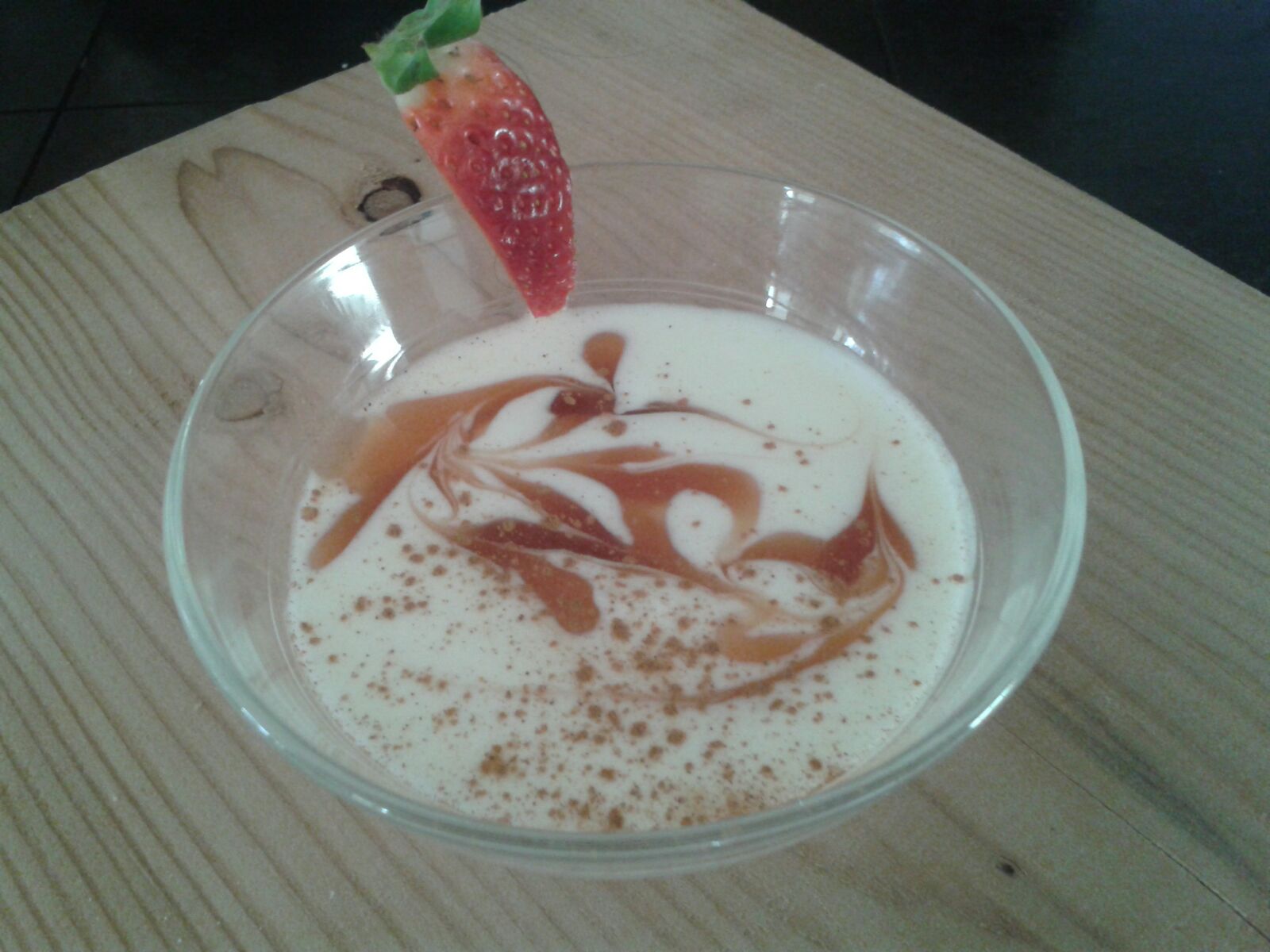
Or here’s a recent creation: yogurt with strawberry jam and cinnamon!!!
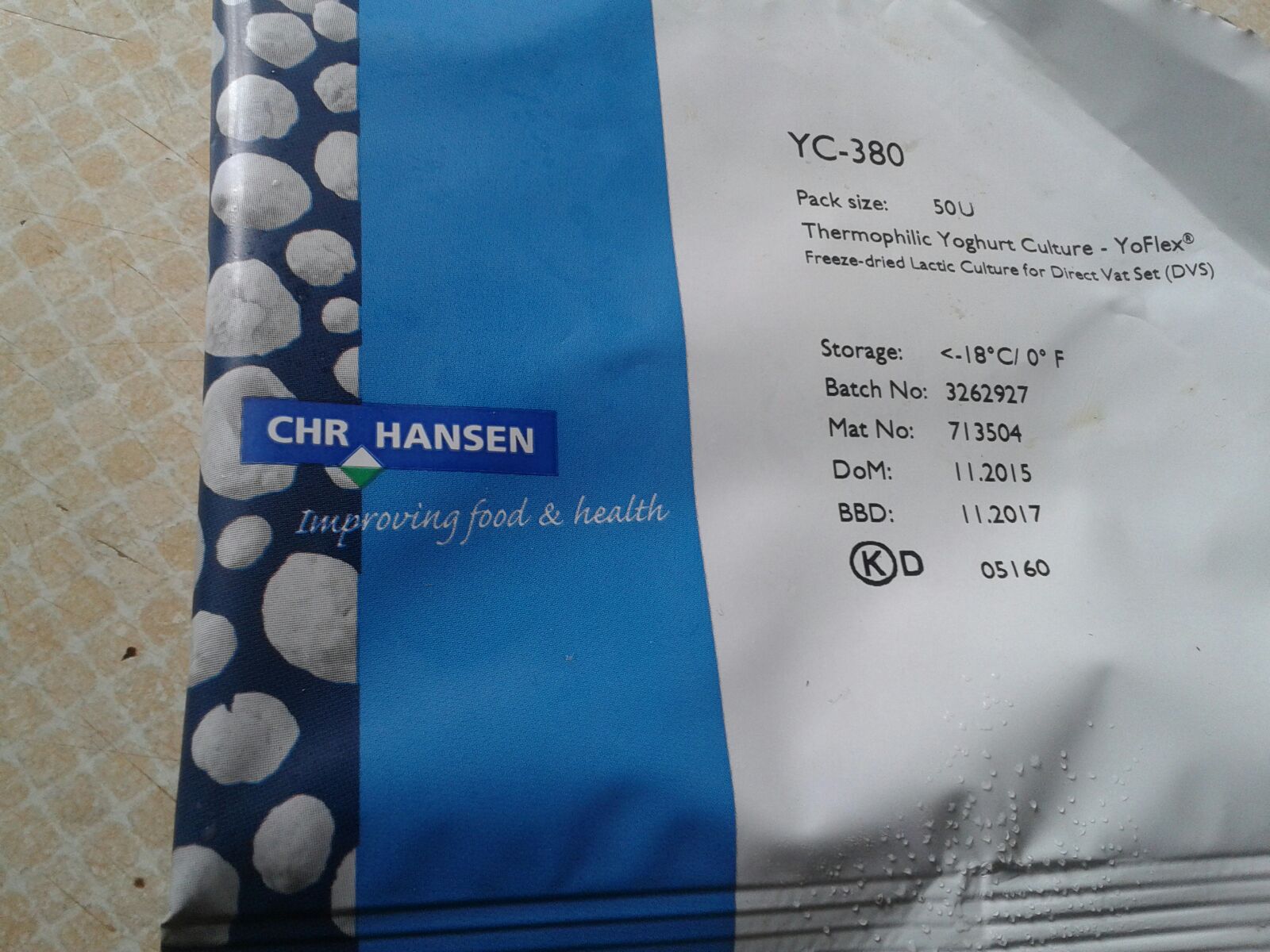
P.S.: I usually order yogurt cultures from www.hoeller-marketing.at or www.bhg.co.at. You can store the cultures in the freezer; when you’re ready to use them, just take out the amount you need and put the rest right back in the freezer. A package like the one shown above lasts a long time. We usually order the cultures for quark, yogurt, cream cheese, etc., for a whole year at a time, or we place a joint order with other farmers’ wives.
Have fun trying these out and making them yourself,

Follow us: